Follow Us on Social for Classroom Resources:
For Elementary School Teachers
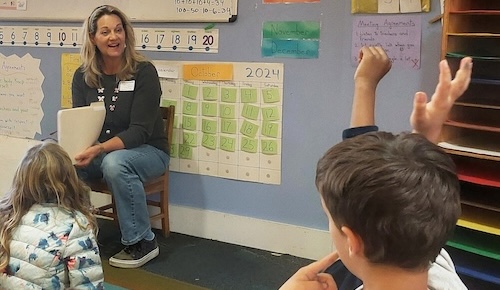
There are lots of ways to teach elementary students about the world’s religions. One way is through holydays.
Just be sure that you are teaching about religion using a non-devotional approach. That means you are sharing interesting, age-appropriate facts about religion and its importance for people in those communities and cultures. You are not promoting or denigrating the beliefs, practices, or rituals of those religions. This page offers resources that are age-appropriate and non-devotional for Elementary educators in any setting (public, private, faith-based, home-based).
Islam
Islam is the 2nd largest religion in the world with over 2 billion adherents. The religion is called Islam; the people are called Muslims. Their biggest holyday is Ramadan, a month-long period of fasting (nothing to eat or drink) from dawn to sundown. At sundown, Muslims gather — either in homes or mosques — for prayers and breaking the daily fast. At the end of the month, there is a big day of festivities, called the Eid {eed}. The dates for Ramadan are determined by the new moon, and Ramadan “moves up” about 2 weeks every year. In 2027, Ramadan will go from early Feb. until early March.
K-5 Ramadan-Eid Powerpoint Presentation
K-5 Ramadan Lesson Plan — Story and Crafts
Ramadan Book Recommendations for Kids in Schools
Judaism
Compared to other major world religions, Judaism is fairly small with about 16 million followers. Although Jews live all over the world, a little less than 1/2 live in Israel and a little less than 1/2 live in the U.S. There are several important holydays, including Passover (which happens around the same time as Easter) and the High Holidays in the fall (which include Rosh Hashanah, Yom Kippur, and Sukkot). However, one of the most popular holydays is Hannukah, which usually happens at some point in December.
For Middle School Teachers
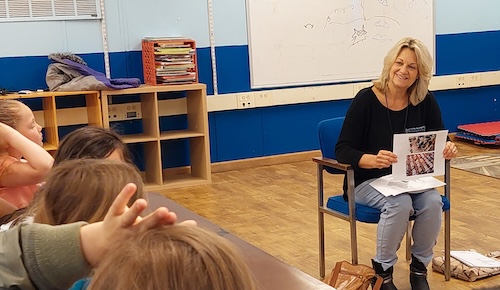
Most Social Studies teachers in the U.S. incorporate a world religions unit in their middle school curriculum. In most cases, teachers use widely-available worksheets intended to teach students the basics of 5 or 6 different religious traditions, including Christianity, Judaism, Islam, Hinduism, and Buddhism. These worksheets often include themes, like “Founders,” “Place of Worship,” “Sacred Text,” with the correct answer being one or two words (e.g., Muhammad, mosque, Quran).
One problem with this approach is that it creates the impression that religions are both static and simplistic. Another problem is that we risk sowing seeds of division by highlighting the differences between religions without also exploring their similarities.
My resources teach about the world’s religions differently by focusing on “lived religion.” There is a huge amount of diversity within religious traditions in terms of beliefs, rituals, and daily practices. Religions have also changed over time and adapted across cultures. Our students need to learn how to navigate this landscape with compassionate inquiry and genuine interest.
Finally, many middle schoolers already know something about religion…either from their own lives or from the media. My resources attempt to capitalize on that natural curiosity and growing knowledge by giving them opportunities to share both what they know and what they’re wondering about.
Places of Worship/Sacred Spaces
One of the most interesting and most visible aspects of religion are places of worship/sacred spaces. Because the U.S. is so religiously-diverse, students often pass by places of worship even if they haven’t yet noticed them. Students may also attend services somewhere. Places of worship … even within a religious tradition … often vary … a LOT! This makes them particularly interesting for students. These resources are designed to help you teach about these sacred spaces in a more engaging way.
Thinking about Places of Worship — student wksht
Instructional Guide for this activity — one page
Taking an entire group of students to visit a place of worship can be done, but it requires a lot of preparation. I recommend that teachers start with themselves. This will allow you to experience some version of what the students will experience … beforehand. It will also allow you to make important connections with the people at these places … which is invaluable when prepping students. These two resources will help you, as teachers, make the most of your visit.